
Direct answer
When a hydraulic filter warning returns after service, preserve the exact message and the conditions in which it appeared. Check the installed-part and service records before ordering again. The recurrence alone cannot distinguish a filtration problem from an indication or circuit problem, and it does not justify bypassing the warning.
Keep the original warning separate from your interpretation
Write down the full displayed code and wording, its date and the operating condition already observed. Do not shorten every hydraulic message to “filter blocked.” Record whether the warning was present before the service, first appeared immediately afterward or returned later. A photograph of the display taken safely is more useful than a remembered paraphrase. If the machine has a stop instruction, follow the manufacturer response before collecting additional information.
What to record before a service or parts decision
| Record | What to include and why |
|---|---|
| Warning identity | Exact code and text; identify whether the display record is current or historical. |
| Timeline | Service date and hours, first recurrence and any later changes; do not invent a test run. |
| Installed item | Actual element number, housing and supplier label; compare with the approved catalog record. |
| Other observations | Existing temperature indications, affected functions and other alerts, with the conditions in which they occurred. |
What the observations do—and do not—establish
A newly fitted element is not automatic proof of correct application or service completion. Equally, an unchanged warning is not proof that the sensor is defective. Give the technician both the before-service and after-service records. The applicable warning definition and troubleshooting procedure determine which filtration, indication and electrical checks are appropriate. Avoid importing a pressure-difference or temperature threshold from another model.
Turn the record into a clear service handoff
Ask for a written finding that names the warning, identifies the evidence used and states whether the original complaint was resolved. If another component is proposed, request its exact identity and why it is relevant. Keep uncertainty visible: “warning recurred, cause unresolved” is a useful service statement. “Sensor failed” without a supporting test is an unsupported ordering instruction.
Safe limits for this guide
Do not suppress the alarm, disconnect its sensor or keep working solely to see whether it clears. Stop and seek qualified guidance when the machine instructions require it or abnormal operation accompanies the warning.
Machine and parts context
This is a general service-planning guide. The linked machine pages organize identification information; they do not make the workflow a model-specific repair procedure.
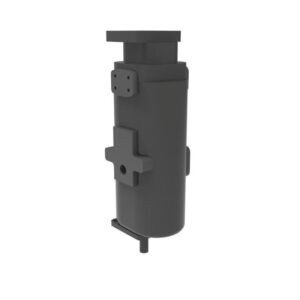
209-60-77532 Hydraulic Tank Return Filter for Komatsu PC1250-8. Registered catalog example; verify the exact serial, installation position and order scope before purchase.

Frequently asked questions
Does a new filter rule out a filtration issue?
No. Its application and the service work still need to be checked.
Should I order a sensor next?
Only after the applicable technical checks support that decision.
Should I reproduce the warning under load?
Do not create an unsafe test. Supply observations already available and let the service team specify any controlled test.
Sources and scope
- Komatsu parts and documentation access — Manufacturer route to machine-specific parts and service documentation. This portal does not supply the individual limits or application approval for this guide.
The observation checklist is Danch Machinery editorial guidance. No customer case, measured result or technician sign-off is claimed. Published or updated 14 September 2026. Obtain the current documentation for the exact machine before any technical procedure.
Request a parts identification check
Send the complete model and serial, component position, exact number or clearly marked uncertainty, quantity and available service findings. Danch Machinery supplies genuine parts; a quotation does not replace a technical diagnosis.
About this guide
Published by Danch Machinery as general parts-identification and service-planning information. It is not a signed technical inspection or a machine-specific repair approval. Refer to the sources and scope stated in the article; confirm service procedures and fitment with the current manufacturer documentation for the exact machine.
Machine configurations and service requirements can differ by model, serial number and market. Confirm procedures and fitment with the current manufacturer documentation for your exact machine.