
Direct answer
Slow or weak excavator movement does not identify a failed main pump by itself. First describe which functions are affected, the conditions already observed and any warning or service history. A pump decision needs a machine-specific technical assessment; replacing the pump from the symptom alone can leave the original cause unresolved.
Define what “slow” means on this machine
Separate a single affected movement from several movements affected together. Record whether the complaint concerns travel, swing or a work-equipment function, and whether the operator noticed it only under load or also during normal unloaded movement. Preserve the selected operating mode and displayed information if known. These observations help frame an assessment, but they are not instructions to run a fresh load test.
What to record before a service or parts decision
| Record | What to include and why |
|---|---|
| Scope | One function or several; left/right or direction differences; date first noticed. |
| Conditions | Known load, operating mode and warm/cold context; mark information unavailable when it was not observed. |
| Machine history | Full model/serial, hours, recent fluid/filter work and previous repairs. |
| Technician findings | Procedure reference, measured quantity, units, test conditions and applicable limit supplied by the qualified technician. |
What the observations do—and do not—establish
The service assessment may need to distinguish engine performance, command/control, oil condition, supply restrictions and hydraulic components. This is a list of assessment areas, not a probability ranking or a claim that any one has failed. A pressure reading without a named test point, condition and applicable specification is not enough to accept or reject a pump. Do not copy a specification from a similar excavator.
Turn the record into a clear service handoff
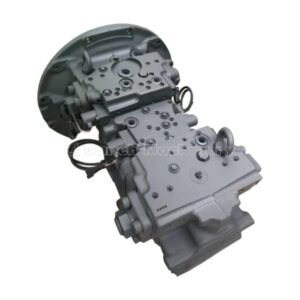
If a pump is recommended, establish whether the proposal is for a complete assembly or a defined component, and obtain the exact orderable number and configuration. Ask what evidence connects that component to the complaint and what service follow-up is required. Retain the technical report with the inquiry so that a parts quotation is not mistaken for a diagnosis.
Safe limits for this guide
Do not loosen hydraulic lines, adjust relief settings, stall an attachment or conduct pressure/flow tests from this article. Heavy attachments, stored pressure and unintended movement require machine-specific controls and qualified personnel.
Machine and parts context
This is a general service-planning guide. The linked machine pages organize identification information; they do not make the workflow a model-specific repair procedure.
Frequently asked questions
Does slow movement prove pump failure?
No. It is a symptom that needs a defined scope and technical assessment.
Is one pressure number enough?
No. The test location, conditions, units and applicable specification must accompany it.
Can a supplier choose a pump from the machine name?
The complete machine identity, pump application and assembly scope still need verification.
Sources and scope
- Komatsu parts and documentation access — Manufacturer route to machine-specific parts and service documentation. This portal does not supply the individual limits or application approval for this guide.
- Caterpillar hydraulic hose maintenance — General leakage and residual-pressure safety background; its Cat-specific instructions are not transferred to Komatsu machines.
The observation checklist is Danch Machinery editorial guidance. No customer case, measured result or technician sign-off is claimed. Published or updated 14 September 2026. Obtain the current documentation for the exact machine before any technical procedure.
Request a parts identification check
Send the complete model and serial, component position, exact number or clearly marked uncertainty, quantity and available service findings. Danch Machinery supplies genuine parts; a quotation does not replace a technical diagnosis.
About this guide
Published by Danch Machinery as general parts-identification and service-planning information. It is not a signed technical inspection or a machine-specific repair approval. Refer to the sources and scope stated in the article; confirm service procedures and fitment with the current manufacturer documentation for the exact machine.
Machine configurations and service requirements can differ by model, serial number and market. Confirm procedures and fitment with the current manufacturer documentation for your exact machine.