Track deviation can feel like a minor annoyance, but constant steering corrections, uneven undercarriage wear, and inaccurate positioning point to something wrong in the travel system. The good news is that most causes are identifiable and many can be corrected without teardown. This guide classifies track deviation, then walks through three practical techniques: track tension, travel components, and hydraulics.
Classify the Deviation First: Travel Drift vs. Rotation Drift
Before touching any component, determine how the machine deviates. Misdiagnosing the type leads to wasted time and wrong parts.
- Travel deviation: When moving forward or reverse, the machine pulls to one side and requires constant steering correction.
- Rotation drift: During stationary work, the house slowly turns on its own and the swing brake or holding function cannot maintain position.
Also assess severity. Slight drift over tens of meters is generally acceptable. Obvious drift requiring correction every 10-15 meters is not normal and needs attention. Record whether the problem appears only on slopes, only when hot, or only with a loaded bucket.
| Symptom | Possible primary area | First check |
|---|---|---|
| Pulls to one side while traveling straight | Track tension, travel motor, or hydraulic flow | Compare track sag on both sides |
| House rotates slowly during stationary work | Swing system or center swivel joint leakage | Check swing motion and hydraulic leakage |
| Drift only when hot | Hydraulic internal leakage | Measure travel circuit pressures hot and cold |
Technique 1: Check Track Tension on Both Sides
Unequal track tension is the most common and easiest cause to correct. A tight track and a loose track travel different distances with each revolution, so the machine naturally pulls toward the loose side.
How to Identify Uneven Tension
- Compare track sag between the two sides at the same point in the undercarriage.
- Measure the extension of the track tension cylinder on each side and compare them.
- If one side is visibly looser or the tension cylinder extension differs, the tension is out of balance.
How to Correct It
- Park the machine on level ground and relieve hydraulic pressure according to the operator manual.
- Locate the track tension adjuster. On most excavators this is a grease-type cylinder.
- Add grease to increase tension or release the valve to reduce tension. Use the manufacturer’s specified sag value for your model.
- Adjust both sides to the same measured value.
- After adjustment, drive the machine a short distance and recheck. Do not assume it is fixed immediately.
Safety note: Never loosen the grease valve or release track tension while the track is under load. Follow lockout/tagout and use proper blocking or jack stands. Track tension grease is under high pressure and can cause injury.
Do not overtighten. Over-tight tracks increase rolling resistance, accelerate pin and bushing wear, raise fuel consumption, and stress the idlers and rollers.
Technique 2: Compare Travel System Components Side by Side
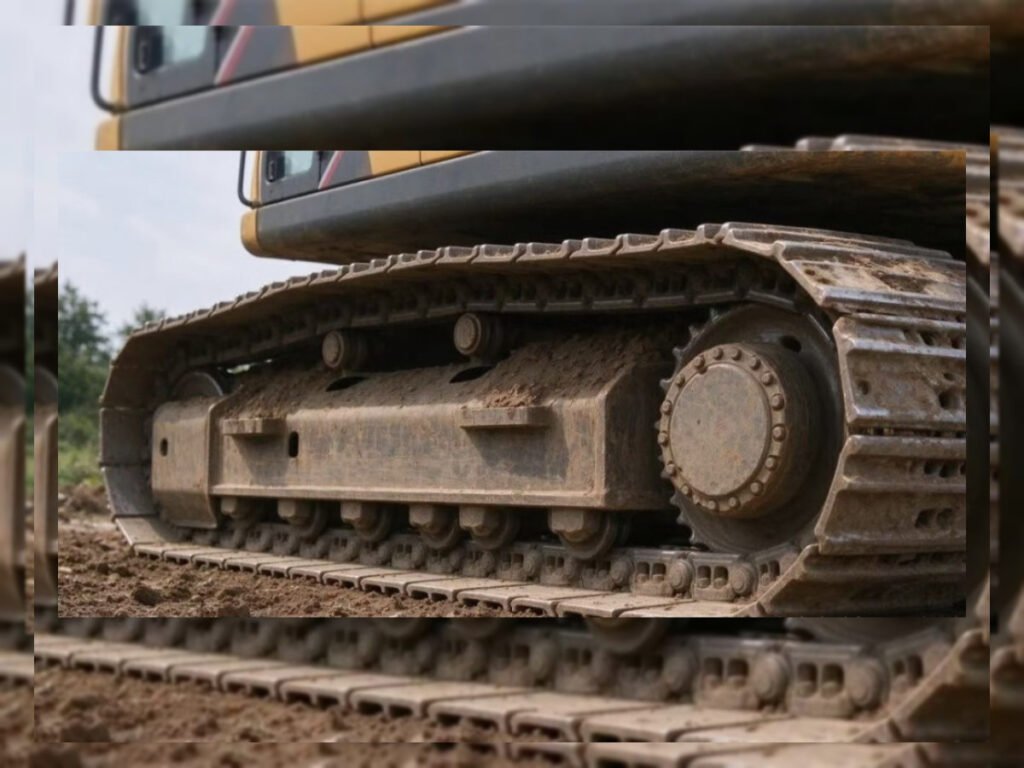
If track tension is balanced but the machine still drifts, the problem may be inside the travel system. A difference in rotational speed or rolling resistance between the two sides will cause drift.
Components to Inspect
- Travel motor: Internal leakage or reduced efficiency on one side changes output speed.
- Travel reducer: Worn gears, abnormal reduction ratio, or damaged bearings cause unequal output.
- Drive sprocket and idler: Excessive wear or damaged tooth profiles prevent proper track engagement.
- Track rollers and carrier rollers: Seized wheels or failed bearings add resistance on one side.
- Track shoes and link assembly: Deformed shoes, worn pins, or stretched pitch on one side alter effective circumference.
Hands-On Test
- Raise the machine or jack up one side of the undercarriage and safely support it.
- Rotate the lifted track by hand or at low idle and feel for consistent resistance.
- Compare speed and effort between the left and right tracks.
- Listen for grinding, clicking, or squealing from the drive system.
An obvious difference in resistance or speed indicates a component fault. Repair or replace the affected side rather than continuing to compensate with steering input.
Safety note: Use proper lifting equipment and support stands. Never rely solely on a hydraulic jack or bucket. Keep hands and tools clear of rotating tracks.
| Component | Possible fault | Effect on drift |
|---|---|---|
| Travel motor | Internal leakage | One track slower |
| Travel reducer | Worn gears / bearing failure | Uneven torque output |
| Drive sprocket/idler | Worn teeth | Poor track engagement |
| Track rollers | Seized or damaged bearing | Increased rolling resistance |
Technique 3: Inspect Hydraulics and Control Systems
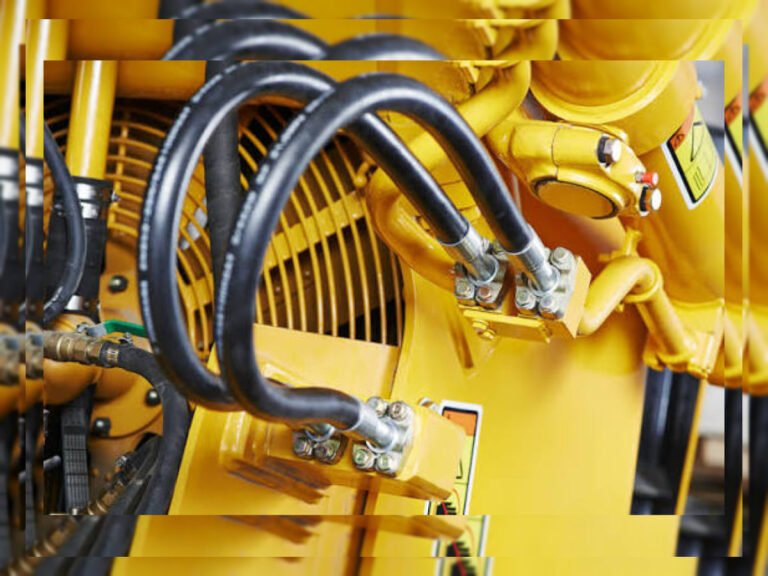
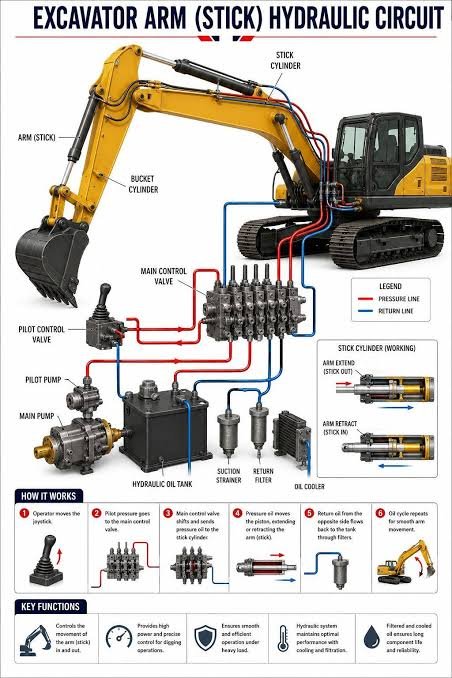
Travel is hydraulically driven. Even small flow differences between the left and right travel circuits will cause drift.
Hydraulic Causes of Track Deviation
- Travel control valve: A sticking spool or unequal spool stroke sends different flow to the two travel motors.
- Pilot control lines: Blockage or leakage causes unequal pilot pressure to the travel control valve.
- Relief valve settings: Inconsistent relief pressure settings result in different torque output.
- Center swivel joint: Worn internal seals allow cross-port leakage and affect travel circuit performance.
- Hydraulic oil condition: Degraded oil, water contamination, or high oil temperature reduces efficiency and stability.
How to Confirm a Hydraulic Problem
- Install pressure gauges on both travel circuit test ports and compare pressures under load.
- Operate the travel levers and check that both control valve spools move simultaneously and fully.
- Observe whether deviation is minor when cold and obvious when hot. This pattern strongly suggests internal leakage in a motor, valve, or swivel joint.
- Check hydraulic oil temperature and condition. Excessive heat or milky oil can point to internal leakage or contamination.
Safety note: Hydraulic pressure testing requires proper gauges, fittings, and knowledge of the system relief settings. Do not disconnect hydraulic lines while the system is pressurized. Refer to the service manual for specific test point locations and pressures.
Hydraulic faults often require controlled testing and professional interpretation. Avoid blindly disassembling the travel motor or valve without confirming the pressure and flow readings.
Rule Out External Causes Before Condemning the Machine
Not every drift is a machine fault. Several operating conditions can mimic track deviation.
- Ground conditions: Soft ground on one side, a slope, or obstacles create natural resistance differences.
- Bucket or attachment offset load: Soil piled to one side of the bucket or an attachment with an off-center center of gravity creates a turning moment.
- Uneven mud on tracks: One track loaded with mud changes ground contact and effective track height.
- Machine design: Some models have a slight inherent drift tendency that is within design tolerance.
Always eliminate these external factors before replacing parts. A simple test: operate the machine on a clean, level concrete surface with an empty bucket and centered attachment. If drift disappears, the cause may be operational, not mechanical.
Practical Diagnostic Sequence
Use this order to avoid unnecessary disassembly and expense.
- Confirm the phenomenon: Is it travel drift or rotation drift? How severe? Cold vs hot? Which ground conditions?
- Rule out external factors: Level ground, empty bucket, clean tracks.
- Check track tension: Compare sag and adjust to OEM spec.
- Check travel components: Jack up and rotate each track; compare resistance, speed, and noise.
- Check hydraulics: Test pressures, verify valve movement, and check temperature-related behavior.
- Seek professional diagnosis: If all the above are normal and drift persists, have a service technician inspect hydraulic components.
Consequences of Ignoring Track Deviation
- Uneven track wear: One side wears faster, requiring early replacement of expensive undercarriage parts.
- Accelerated travel component damage: Motors and reducers operate under constant imbalance.
- Reduced work accuracy: Trenching, grading, and slope work deviate, leading to rework.
- Increased fuel consumption: Constant steering correction and extra resistance waste fuel.
- Safety hazards: Severe drift in narrow areas or on slopes increases the risk of accidents.
Preventive Habits That Reduce Track Drift
- Check track tension weekly or every two weeks.
- Clean mud and debris from tracks after each shift.
- Load buckets as centered as possible; avoid one-sided loading.
- Alternate turning direction rather than always turning to the same side.
- Change hydraulic oil and filters on schedule.
- Investigate abnormal travel noise early before it becomes a major repair.
- Keep a log of when deviation started and under what conditions.
Common Misconceptions About Track Deviation
“Track deviation is just an operator problem—steer more carefully.”
Slight drift can be compensated by steering, but obvious drift is almost always a machine condition that needs correction.
“The tighter the track, the better.”
Overtightening increases resistance, wear, and fuel burn. Stick to the manufacturer’s sag spec.
“Adjusting one side is enough.”
Tension must be equal side to side. Adjusting only one side can make drift worse.
“You have to tear down the undercarriage to find the problem.”
Start with tension and external causes. Many drift issues are solved without component removal.
Key Takeaways: Three Techniques for Track Deviation
- Technique 1: Check track tension—compare sag, adjust to OEM spec on both sides, retest, and avoid overtightening.
- Technique 2: Compare travel components—jack up and rotate each side, checking motors, reducers, sprockets, idlers, rollers, and track shoes for resistance, speed, and noise differences.
- Technique 3: Check hydraulics—test travel circuit pressures, verify control valve synchronization, and watch for temperature-dependent drift.
Follow the diagnostic sequence: confirm the symptom, rule out external factors, check tension, check components, check hydraulics, then call a professional. Ignoring drift costs more than the repair—uneven wear, fuel waste, and safety risk add up quickly.
Need parts to correct track deviation? Danch Machinery supplies undercarriage components, travel motors, and hydraulic parts. Contact us for a fitment check before you order.
About this guide
Published by Danch Machinery as general parts-identification and service-planning information. It is not a signed technical inspection or a machine-specific repair approval. Refer to the sources and scope stated in the article; confirm service procedures and fitment with the current manufacturer documentation for the exact machine.
Machine configurations and service requirements can differ by model, serial number and market. Confirm procedures and fitment with the current manufacturer documentation for your exact machine.