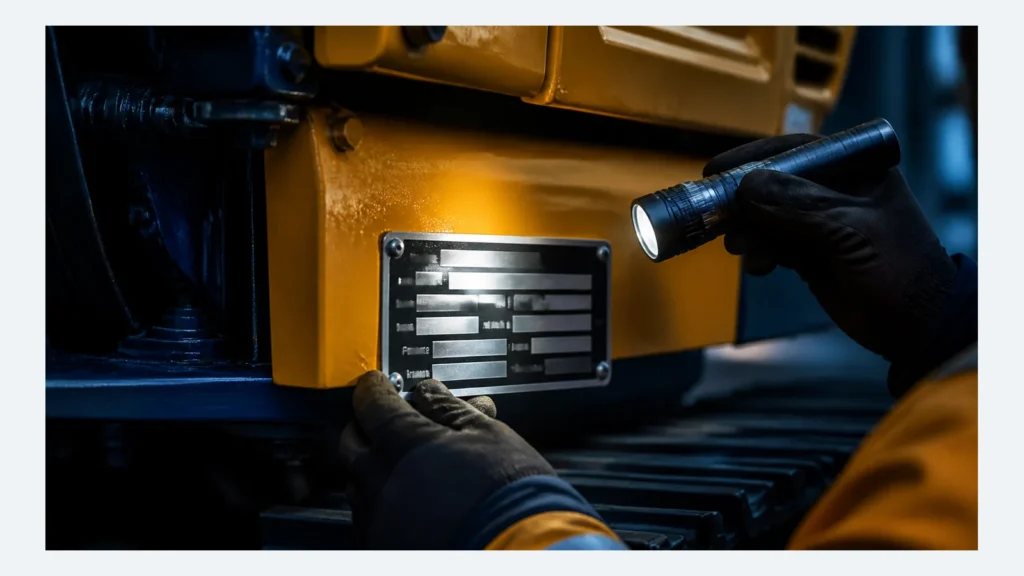
A machine plate normally provides a model designation and a unique serial or product identification number. Parts matching requires both. The model narrows the catalog; the serial number locates the production range and configuration.
Key takeaways
- Photograph the entire plate before transcribing it.
- Keep prefixes, leading zeros, suffixes and punctuation.
- Do not substitute an engine number for the machine serial number.
- Use the plate information exactly as shown in the parts inquiry.
Model versus serial number
The model describes a machine family, while the serial number identifies one production unit. Two machines that share a model can sit on different sides of a parts-book serial break.
Other numbers on the machine
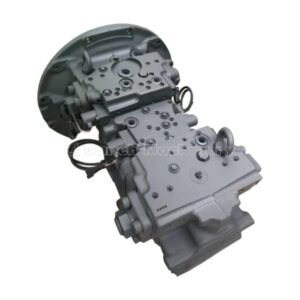
Engines, pumps, axles and attachments may carry their own identification plates. Label each photo so the supplier knows whether a number belongs to the whole machine or a component.
How to capture a difficult plate
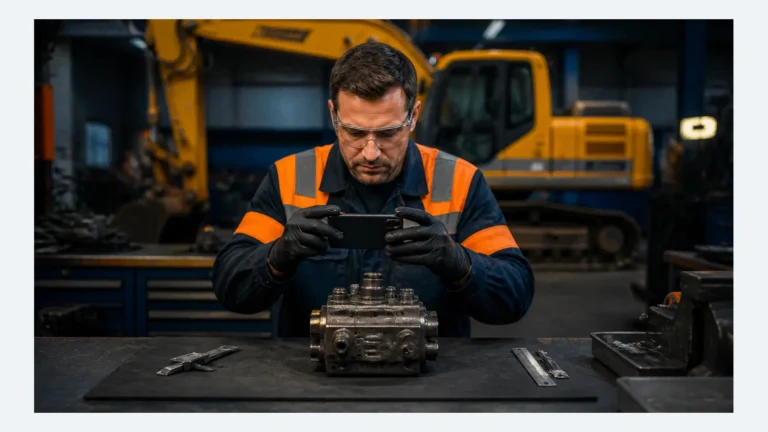
Use indirect light to reduce glare, take a straight-on image and one angled image, and include a wider photo showing where the plate is located. Never edit characters into the image.
A clean inquiry format
Write: Brand; machine model; complete serial number; component name; visible part number; quantity; symptoms; and country. Attach original-resolution photographs.
Frequently asked questions
Where is the serial plate located?
Location varies by machine family. Check the operator manual or ask the manufacturer or dealer for the exact location.
Can the year replace the serial number?
No. A year is not precise enough to identify production changes.
Why include the engine serial number?
It helps when identifying engine-specific components, but it does not replace the machine serial number.
Need help confirming a part?
Send the machine model, complete serial number, old part number and clear photos. Danch Machinery can help review the identification information before quotation.
Keep machine and engine identities separate
Use this blank record with your own evidence. It is a planning template, not a completed customer case or an approval to install a part.
| Field | What to record |
|---|---|
| Machine plate | Photo location, full model and serial |
| Engine plate | Engine model and serial, recorded in separate fields |
| Uncertain text | Close photograph; do not substitute guessed digits |
Related guides
- How to Identify a Komatsu Part Number
- How to Identify an Unknown Excavator Part from Photos
- How to Check Parts Fitment Before an International Order
Reference scope
The checklist above is Danch Machinery editorial guidance for recording information. It does not certify a particular machine, maintenance interval, repair procedure or part fitment. Use the manufacturer documentation for the exact machine and preserve the reference with the service or ordering record.
Komatsu parts and manual access provides a route to manufacturer information. A general parts page does not prove a specific compatibility or a supplier’s authorization.
About this guide
Published by Danch Machinery as general parts-identification and service-planning information. It is not a signed technical inspection or a machine-specific repair approval. Refer to the sources and scope stated in the article; confirm service procedures and fitment with the current manufacturer documentation for the exact machine.
Machine configurations and service requirements can differ by model, serial number and market. Confirm procedures and fitment with the current manufacturer documentation for your exact machine.