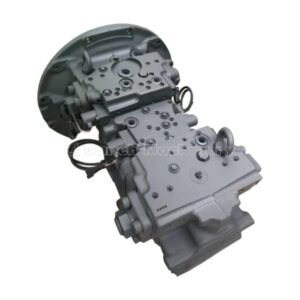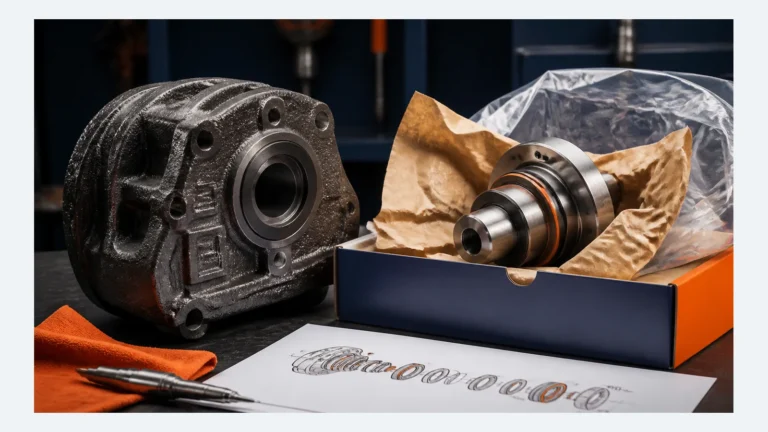

An unknown excavator part is best identified through context: where it is installed, what system it belongs to, its interfaces and dimensions, plus the machine model and serial number. A single isolated photo rarely proves identity.
Key takeaways
- Photograph the part before removal and from all sides.
- Include ports, connectors, splines and mounting holes.
- Add a ruler only when it can be positioned accurately.
- Describe the function and installation location.
The minimum photo set
Capture the whole machine area, installed component, removed component, every label, all connection faces and any damage. Keep files at original resolution.
Useful measurements
Depending on the part, record overall dimensions, bolt-hole centers, shaft diameter, spline count, thread size, port arrangement, connector pins and voltage marking. Do not force a measurement you cannot take reliably.
Use system context
State whether the part belongs to the hydraulic, engine, electrical, undercarriage, cooling or powertrain system and describe hoses or components connected to it.
Limits of visual matching
External similarity does not prove internal displacement, pressure rating, calibration or material. Final confirmation still needs catalog or specification evidence.
Frequently asked questions
Can AI identify a machinery part from one image?
It may suggest a category, but it should not be the sole basis for ordering a safety- or fitment-critical component.
Should I remove dirt before photographing?
Clean identification areas safely without erasing labels or evidence of leakage.
What if dimensions are unavailable?
Provide more context photos and the exact machine identity so catalog evidence can carry more of the match.
Need help confirming a part?
Send the machine model, complete serial number, old part number and clear photos. Danch Machinery can help review the identification information before quotation.
Photo set for an unidentified part
Use this blank record with your own evidence. It is a planning template, not a completed customer case or an approval to install a part.
| Field | What to record |
|---|---|
| Overall view | Show the full part and installation context |
| Identification | Photograph each label, stamp and marking |
| Interfaces | Show mounting, ports and connectors without dismantling unsafe assemblies |
| Scale | Record measured dimensions only when safe; state units |
Related guides
- How to Identify a Komatsu Part Number
- How to Read a Construction Machine Model and Serial Plate
- How to Check Parts Fitment Before an International Order
Reference scope
The checklist above is Danch Machinery editorial guidance for recording information. It does not certify a particular machine, maintenance interval, repair procedure or part fitment. Use the manufacturer documentation for the exact machine and preserve the reference with the service or ordering record.
Komatsu parts and manual access provides a route to manufacturer information. A general parts page does not prove a specific compatibility or a supplier’s authorization.
About this guide
Published by Danch Machinery as general parts-identification and service-planning information. It is not a signed technical inspection or a machine-specific repair approval. Refer to the sources and scope stated in the article; confirm service procedures and fitment with the current manufacturer documentation for the exact machine.
Machine configurations and service requirements can differ by model, serial number and market. Confirm procedures and fitment with the current manufacturer documentation for your exact machine.