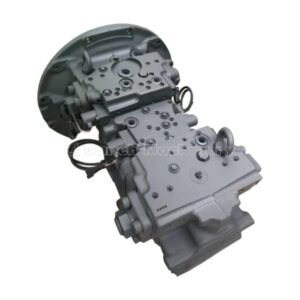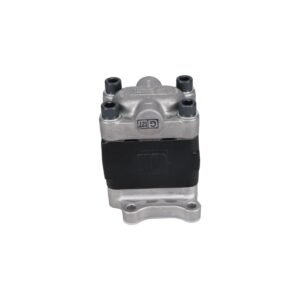
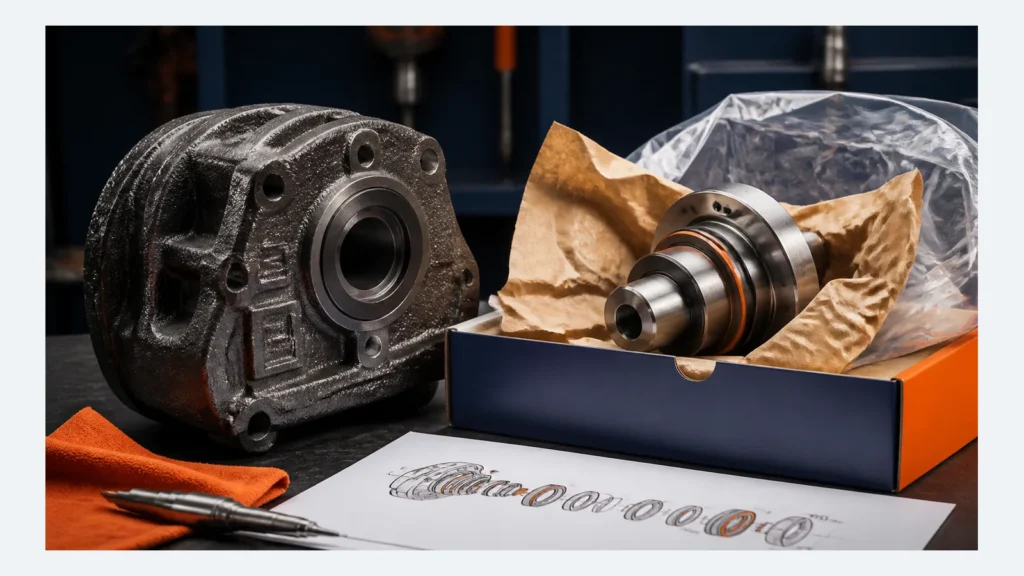
A casting number identifies a raw or machined casting, while an orderable part number identifies the service component or assembly sold through a parts system. The two can be related, but they are not automatically interchangeable.
Key takeaways
- Treat raised cast characters as identification evidence, not final proof.
- Look for labels or stamped numbers on the complete assembly.
- Confirm included subcomponents before comparing quotations.
- Use a parts-book illustration to identify the service level.
Why the numbers differ
One casting can be used in several finished parts, and a service assembly can include bearings, seals, shafts or valves not represented by the housing mark.
How to identify the correct service part
Determine whether you need a housing, internal component, repair kit or complete assembly. Match the callout in the correct catalog and review the bill of materials.
Comparison checklist
Ask suppliers to state exactly what is included, the orderable number they matched, any cross-reference used and which interfaces were checked.
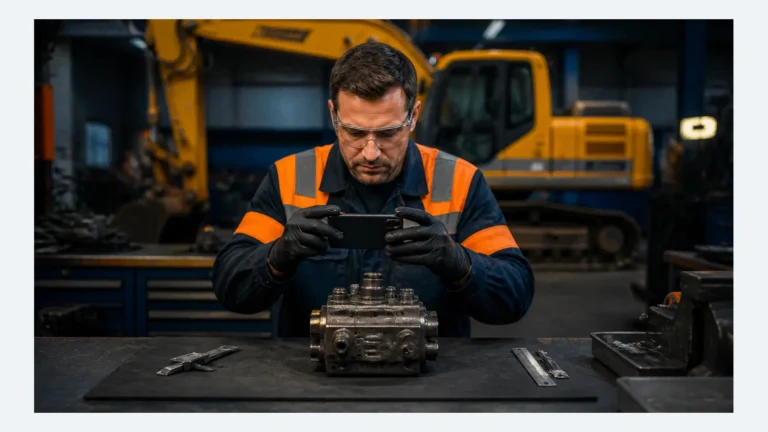
Photo evidence that helps
Provide the casting mark, overall assembly, data plate, shaft or spline, port layout, connector and mounting pattern with a scale where practical.
Frequently asked questions
Can a supplier search by casting number?
It can be a useful lead, but the result still needs machine and assembly verification.
Why do several listings use the same casting number?
They may share a housing while differing internally or by configuration.
Should the quotation show both numbers?
Yes, when a casting reference was used, the supplier should also state the proposed orderable part number.
Need help confirming a part?
Send the machine model, complete serial number, old part number and clear photos. Danch Machinery can help review the identification information before quotation.
Compare the evidence before naming the part
Use this blank record with your own evidence. It is a planning template, not a completed customer case or an approval to install a part.
| Field | What to record |
|---|---|
| Casting mark | Transcribe as a casting mark until verified |
| Assembly label | Record all label text and the assembly context |
| Catalog evidence | Find the saleable assembly and included components |
Related guides
- How to Identify a Komatsu Part Number
- How to Verify a Superseded or Replacement Part Number
- How to Check Parts Fitment Before an International Order
Reference scope
The checklist above is Danch Machinery editorial guidance for recording information. It does not certify a particular machine, maintenance interval, repair procedure or part fitment. Use the manufacturer documentation for the exact machine and preserve the reference with the service or ordering record.
Komatsu parts and manual access provides a route to manufacturer information. A general parts page does not prove a specific compatibility or a supplier’s authorization.
About this guide
Published by Danch Machinery as general parts-identification and service-planning information. It is not a signed technical inspection or a machine-specific repair approval. Refer to the sources and scope stated in the article; confirm service procedures and fitment with the current manufacturer documentation for the exact machine.
Machine configurations and service requirements can differ by model, serial number and market. Confirm procedures and fitment with the current manufacturer documentation for your exact machine.