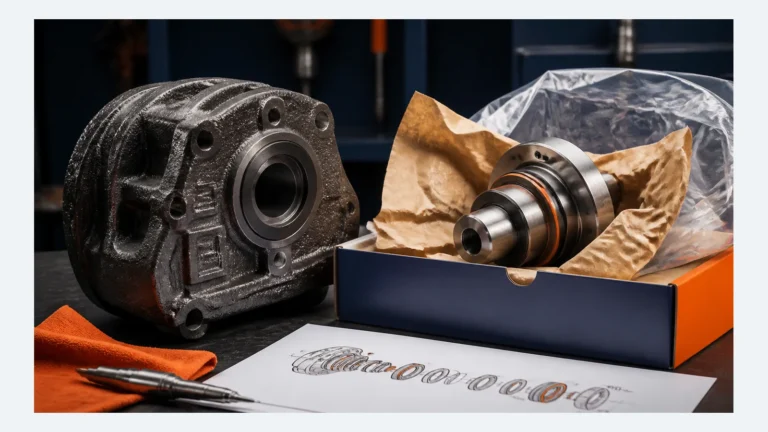
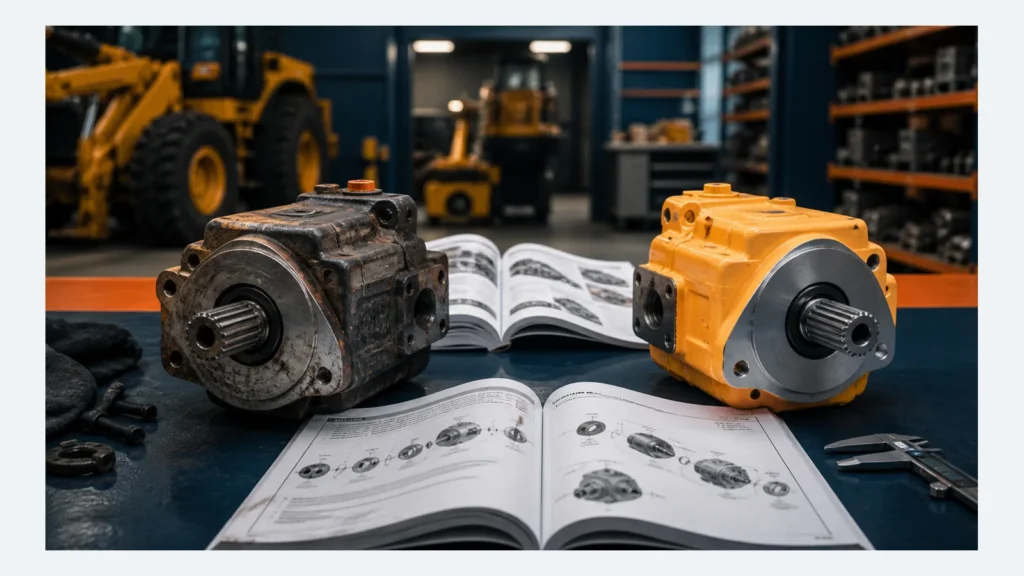
A supersession is a documented change from an earlier order number to a later one. It is not proof that every new-number part fits every old-number application. Verify the direction of the supersession, serial applicability and any companion parts or installation instructions.
Key takeaways
- Use a current, traceable catalog source.
- Record the old-to-new direction and catalog date.
- Check serial breaks and required companion parts.
- Keep the original number in the purchasing record.
What supersession can mean
The change may reflect a design revision, supplier change, kit consolidation or numbering update. Some substitutions are one-way.
Verification workflow
Start with the old number and exact machine identity, locate the current catalog record, review notes and quantities, and confirm whether seals, fasteners, connectors or brackets also change.
How to compare supplier claims
Request the source of the cross-reference and a written fitment statement. Avoid relying on marketplace titles copied across many unrelated models.
Receiving inspection
Check package labels, physical interfaces and included items before installation. Preserve packaging until fitment is confirmed.
Frequently asked questions
Is the newest number always better?
It may be the current service number, but suitability still depends on the catalog application and any installation conditions.
Can I mix old and new components?
Only when the relevant service information permits it. Some revisions require matched components.
How should supersessions be stored?
Maintain a dated chain of old and new numbers with the source and affected machine serial range.
Need help confirming a part?
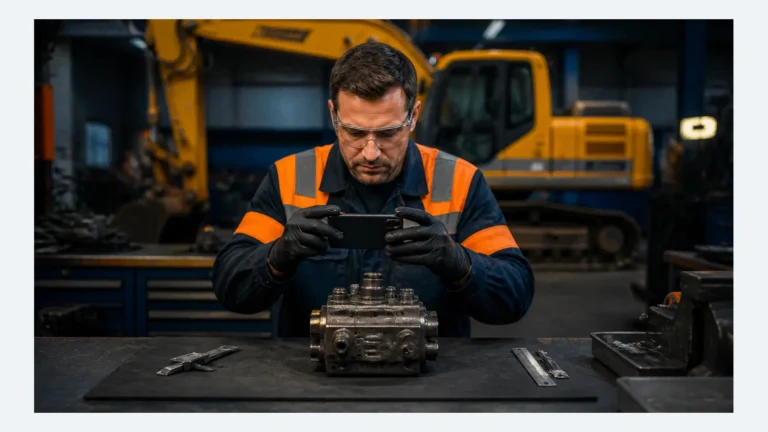
Send the machine model, complete serial number, old part number and clear photos. Danch Machinery can help review the identification information before quotation.
Document a replacement-number chain
Use this blank record with your own evidence. It is a planning template, not a completed customer case or an approval to install a part.
| Field | What to record |
|---|---|
| Starting number | The original complete ordering number |
| Replacement reference | Manufacturer catalog notice or current parts listing |
| Conditions | Direction of substitution, serial applicability and additional items |
| Decision | Confirmed current order number, or unresolved |
Related guides
Reference scope
The checklist above is Danch Machinery editorial guidance for recording information. It does not certify a particular machine, maintenance interval, repair procedure or part fitment. Use the manufacturer documentation for the exact machine and preserve the reference with the service or ordering record.
Komatsu parts and manual access provides a route to manufacturer information. A general parts page does not prove a specific compatibility or a supplier’s authorization.
About this guide
Published by Danch Machinery as general parts-identification and service-planning information. It is not a signed technical inspection or a machine-specific repair approval. Refer to the sources and scope stated in the article; confirm service procedures and fitment with the current manufacturer documentation for the exact machine.
Machine configurations and service requirements can differ by model, serial number and market. Confirm procedures and fitment with the current manufacturer documentation for your exact machine.