Direct answer: On a rebuilt or modified machine, identify the installed component before relying on the machine model. Document the machine plate, component plate, mounting points, ports, connectors, shaft or flange details and previous repair records. The original parts catalog remains useful, but it may not describe a replacement assembly installed later.
Key takeaways
- Treat the current installed configuration as evidence.
- Do not assume the base machine catalog reflects later modifications.
- Photograph interfaces as well as the component body.
- Record previous supplier references without treating them as verified cross-references.
Find the modification boundary
Determine whether the change affects one replaceable component, a complete system or the machine’s wiring and controls. This defines which surrounding parts may also differ from the original catalog.
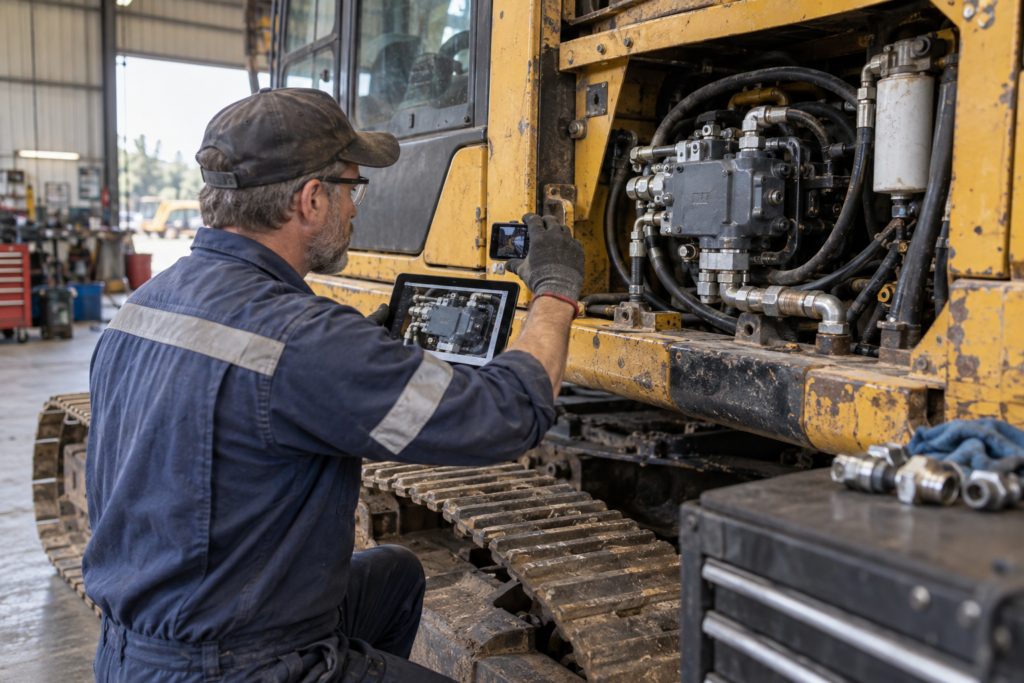
Document the installed component
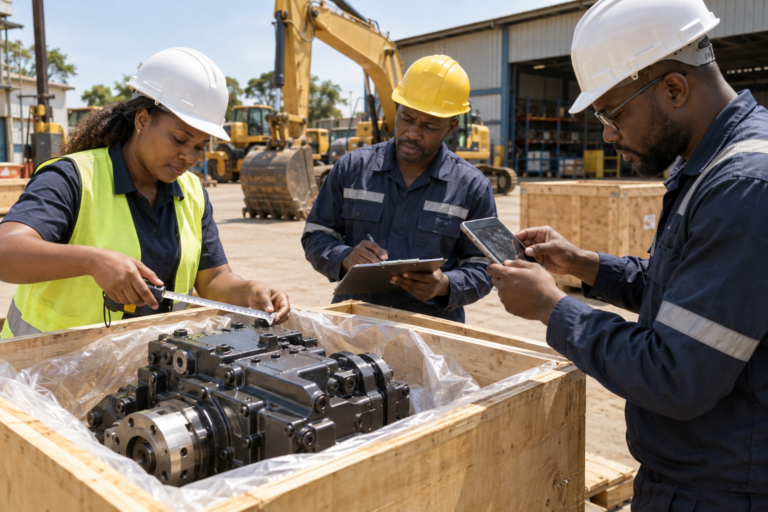
Photograph identification plates, casting marks, port positions, connectors, shafts, flanges and mounts. Use a scale for dimensions and record units.
Compare with the original catalog
Use the serial-specific catalog to establish the original arrangement. Then list every visible difference instead of choosing the closest-looking catalog illustration.
Use repair history carefully
Invoices and old quotations can provide leads, but supplier stock codes are not automatically manufacturer part numbers. Ask what evidence supports each cross-reference.
Prepare a safer quotation request
State clearly that the machine is rebuilt or modified. Request written confirmation of the supplied interfaces and keep installation decisions with qualified service personnel.
Practical workflow
- Freeze the verified machine, assembly and part facts first. Leave unknown fields marked as unknown instead of filling them from visual similarity.
- Attach photographs, markings, measurements and records to the correct line item so another reviewer can follow the evidence.
- Ask the supplier to repeat the proposed identity, supplied scope and assumptions in writing before freight is compared or booked.
- After packing, reconcile quantity, package references, dimensions, weights, destination and document scope before dispatch.
Frequently asked questions
Can the machine serial number still help?
Yes. It establishes the original build and catalog starting point, even when the current installed component differs.
Are matching dimensions enough?
No. Pressure rating, displacement, electrical characteristics, materials and internal design may differ despite similar dimensions.
What if the old component has no readable plate?
Send full installation photographs, interface dimensions, system location and any repair history. Explain which facts remain unknown.
Related guides
- Part-number identification
- Verify fitment before ordering
- Prepare and compare a parts quote
- Request a parts quotation
Send a traceable parts inquiry
Include the machine model and serial number, marked part details, photographs, quantity and destination. An inquiry does not by itself confirm fitment, stock, price or delivery time.
Prepared as a procurement and identification guide. Machine-specific fitment, service procedures, customs requirements and transport commitments require separate verification.
About this guide
Published by Danch Machinery as general parts-identification and service-planning information. It is not a signed technical inspection or a machine-specific repair approval. Refer to the sources and scope stated in the article; confirm service procedures and fitment with the current manufacturer documentation for the exact machine.
Machine configurations and service requirements can differ by model, serial number and market. Confirm procedures and fitment with the current manufacturer documentation for your exact machine.