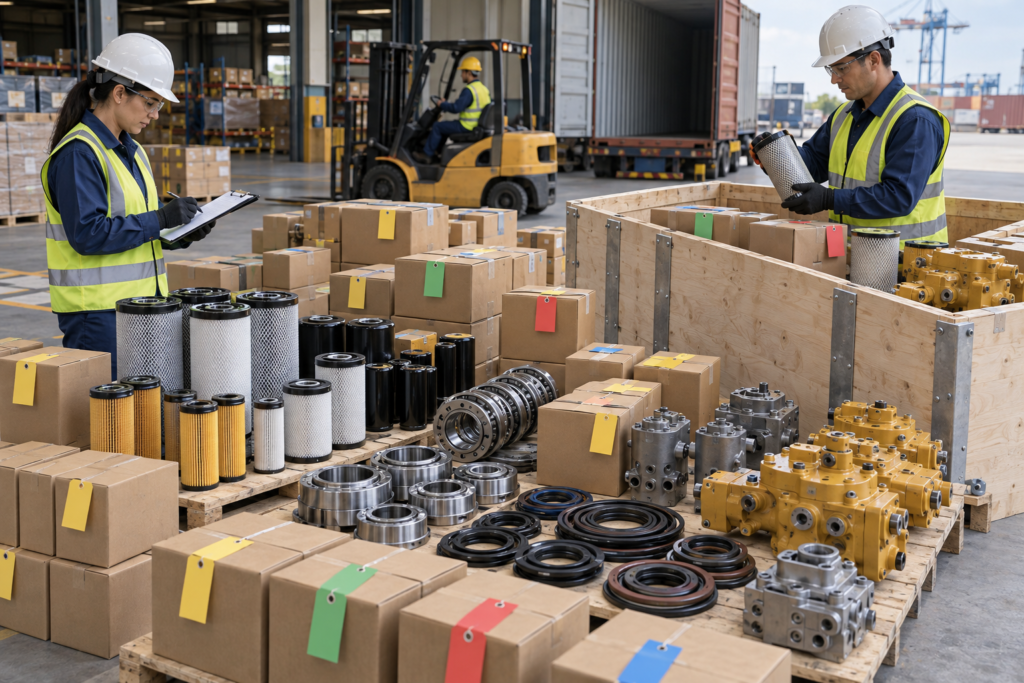
Direct answer: A consolidated parts shipment should preserve line-item identity from quotation through unpacking. Group compatible items, label every package against the packing list, separate fragile or contamination-sensitive parts, record gross and net weights, and confirm which orders and machines each package supports. Consolidation should reduce logistics work without creating identification errors.
Key takeaways
- Keep each RFQ and machine application traceable inside the consolidated load.
- Separate clean, fragile, heavy and fluid-contaminated items.
- Use package-level labels that match the packing list.
- Confirm whether partial release is needed for urgent items.
Build one master packing list
Give every package a unique identifier and list its contents, quantity, net weight and related order line. Keep part numbers exactly as confirmed on the quotation.
Group compatible cargo
Do not allow heavy castings to move against filters, sensors or sealing surfaces. Use individual protection and internal restraint.
Control contamination
Cap hydraulic ports, bag clean components and isolate used cores or items with fluid residue. Confirm carrier restrictions before acceptance.
Check dimensions before closing crates
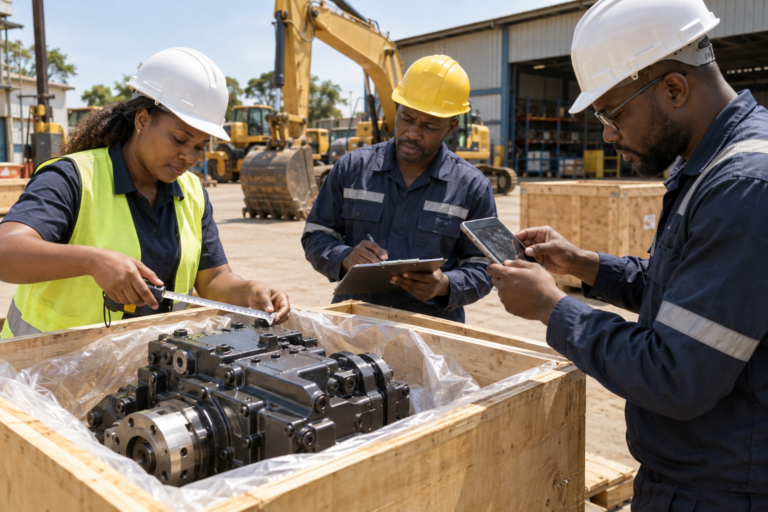
Record final package dimensions and gross weights. Verify lifting and center-of-gravity needs for heavy packages.
Plan receiving at destination
Send the packing list before arrival and identify which package contains urgent parts. Photograph closed crates and package markings.
Practical workflow
- Freeze the verified machine, assembly and part facts first. Leave unknown fields marked as unknown instead of filling them from visual similarity.
- Attach photographs, markings, measurements and records to the correct line item so another reviewer can follow the evidence.
- Ask the supplier to repeat the proposed identity, supplied scope and assumptions in writing before freight is compared or booked.
- After packing, reconcile quantity, package references, dimensions, weights, destination and document scope before dispatch.
Frequently asked questions
Can parts from several purchase orders share a crate?
Yes, if the packing list and internal labels preserve traceability and the buyer agrees to the consolidation.
Should all small parts go in one box?
Only when individual bags and labels prevent mixing, abrasion and loss.
What information should appear on the packing list?
Package number, part identity, quantity, weights, dimensions and purchase-order or RFQ reference.
Related guides
- Part-number identification
- Verify fitment before ordering
- Prepare and compare a parts quote
- Request a parts quotation
Send a traceable parts inquiry
Include the machine model and serial number, marked part details, photographs, quantity and destination. An inquiry does not by itself confirm fitment, stock, price or delivery time.
Prepared as a procurement and identification guide. Machine-specific fitment, service procedures, customs requirements and transport commitments require separate verification.
About this guide
Published by Danch Machinery as general parts-identification and service-planning information. It is not a signed technical inspection or a machine-specific repair approval. Refer to the sources and scope stated in the article; confirm service procedures and fitment with the current manufacturer documentation for the exact machine.
Machine configurations and service requirements can differ by model, serial number and market. Confirm procedures and fitment with the current manufacturer documentation for your exact machine.