Direct answer: For machinery parts imports into African markets, verify the machine and requested item first, then build the shipment around route, site access and receiving capability. Robust packing, package-level records and clear freight scope matter when cargo changes hands several times or travels far inland. Local brokers should confirm country-specific import requirements.
Key takeaways
- Use complete machine and component evidence, not visual similarity.
- Plan packing for handling stages and inland transport.
- State the exact country, city and final site in freight requests.
- Prepare receiving records before cargo arrives.
Verify the requested item
Record model suffix, serial number, assembly identity, marked numbers, photographs and quantities. Ask the supplier to repeat the confirmed identity.
Describe the delivery route
A port or airport is not necessarily the final destination. Include inland distance, road access, lifting limits and site receiving hours where relevant.
Specify durable packing
Protect corrosion-sensitive surfaces, cap ports, brace heavy components and label packages against the packing list.
Clarify commercial responsibility
Confirm named delivery point, freight inclusions, insurance where applicable and charges excluded from the quotation.
Inspect at receiving
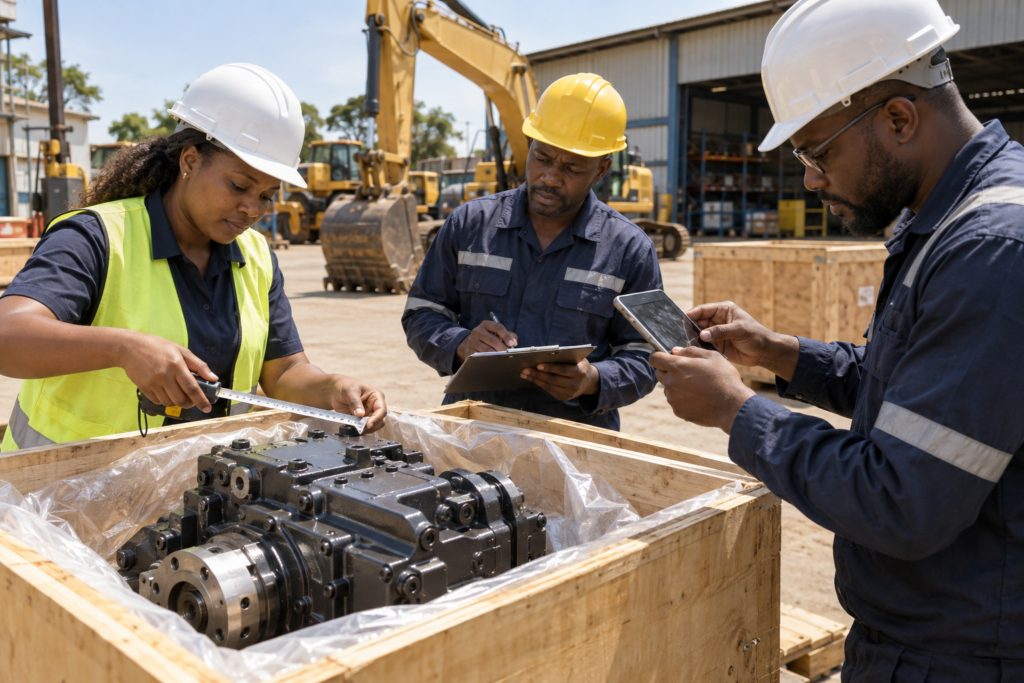
Photograph packages before opening, compare seals and counts, and report visible damage promptly through the agreed process.
Practical workflow
- Freeze the verified machine, assembly and part facts first. Leave unknown fields marked as unknown instead of filling them from visual similarity.
- Attach photographs, markings, measurements and records to the correct line item so another reviewer can follow the evidence.
- Ask the supplier to repeat the proposed identity, supplied scope and assumptions in writing before freight is compared or booked.
- After packing, reconcile quantity, package references, dimensions, weights, destination and document scope before dispatch.
Frequently asked questions
Is one import process valid for all African countries?
No. Procurement controls can be shared, but customs and tax requirements vary and need local confirmation.
Why provide the final inland site?
It affects route, handling, package size, delivery equipment and total cost.
What should be checked before unpacking?
Package count, marks, external damage, moisture exposure and transport documents.
Related guides
- Part-number identification
- Verify fitment before ordering
- Prepare and compare a parts quote
- Request a parts quotation
Send a traceable parts inquiry
Include the machine model and serial number, marked part details, photographs, quantity and destination. An inquiry does not by itself confirm fitment, stock, price or delivery time.
Prepared as a procurement and identification guide. Machine-specific fitment, service procedures, customs requirements and transport commitments require separate verification.
About this guide
Published by Danch Machinery as general parts-identification and service-planning information. It is not a signed technical inspection or a machine-specific repair approval. Refer to the sources and scope stated in the article; confirm service procedures and fitment with the current manufacturer documentation for the exact machine.
Machine configurations and service requirements can differ by model, serial number and market. Confirm procedures and fitment with the current manufacturer documentation for your exact machine.