Direct answer: Choose air or sea freight after the parts are identified, packed dimensions and weights are known, and the operational deadline is clear. Air freight can suit urgent, compact and higher-value items; sea freight can suit heavy or consolidated cargo. Compare the complete route, packing and destination charges rather than the headline freight rate alone.
Key takeaways
- Use packed—not bare-part—dimensions and weight.
- Compare total route cost and realistic transit stages.
- Match packing to handling and moisture exposure.
- Confirm dangerous-goods or fluid restrictions before booking.
Define the operational deadline
Separate the date a machine stops from the latest useful arrival date. Include customs, inland delivery and site receiving time in the decision.
Calculate chargeable size
Air freight may be charged by dimensional weight, while sea freight depends on shipment type and volume. Obtain final crate dimensions before comparing.
Review handling and packing
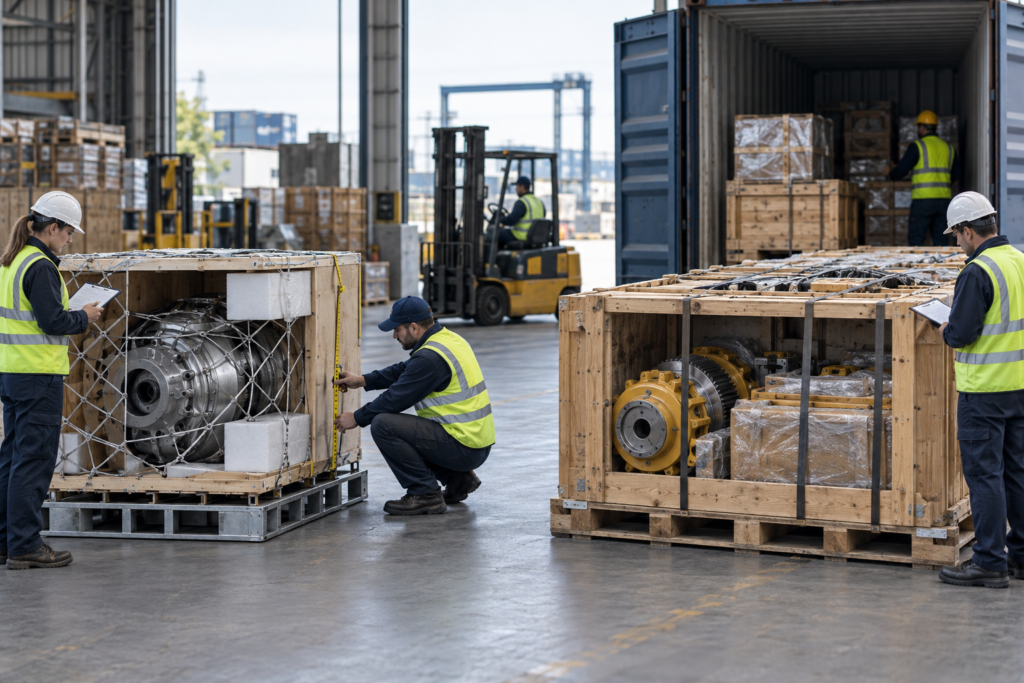
A dense metal part needs secure restraint in either mode. Sea routes may require stronger moisture protection; air cargo still needs impact and movement protection.
Compare route scope
Ask whether pickup, export handling, documentation, destination charges, customs brokerage and final delivery are included.
Use a split shipment when justified
A small critical item may move by air while heavy noncritical items move by sea. Keep part identity and packing lists separated for each shipment.
Practical workflow
- Freeze the verified machine, assembly and part facts first. Leave unknown fields marked as unknown instead of filling them from visual similarity.
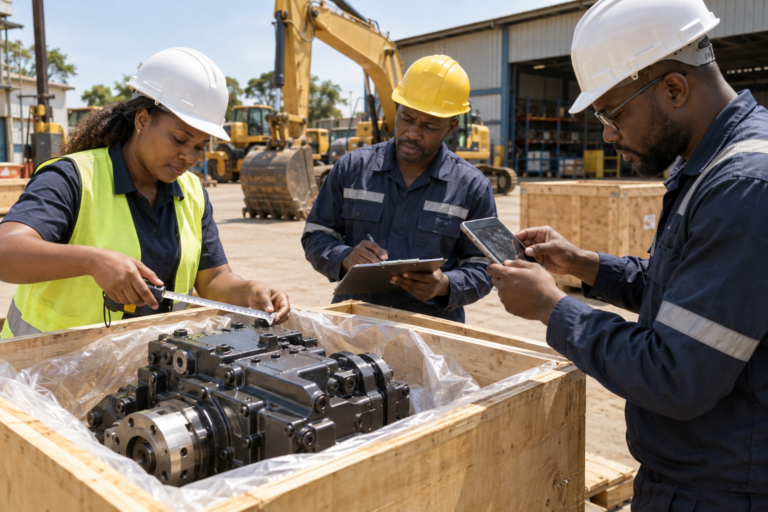
- Attach photographs, markings, measurements and records to the correct line item so another reviewer can follow the evidence.
- Ask the supplier to repeat the proposed identity, supplied scope and assumptions in writing before freight is compared or booked.
- After packing, reconcile quantity, package references, dimensions, weights, destination and document scope before dispatch.
Frequently asked questions
Is air freight always faster?
It is usually faster in transit, but pickup, export handling, customs and destination delivery still affect the arrival date.
Is sea freight always cheaper?
Not for every small shipment. Compare minimum charges, port fees, local delivery and packing as well as ocean freight.
When should the freight quote be requested?
After quantity, packed dimensions, gross weight, destination and trade terms are defined.
Related guides
- Part-number identification
- Verify fitment before ordering
- Prepare and compare a parts quote
- Request a parts quotation
Send a traceable parts inquiry
Include the machine model and serial number, marked part details, photographs, quantity and destination. An inquiry does not by itself confirm fitment, stock, price or delivery time.
Prepared as a procurement and identification guide. Machine-specific fitment, service procedures, customs requirements and transport commitments require separate verification.
About this guide
Published by Danch Machinery as general parts-identification and service-planning information. It is not a signed technical inspection or a machine-specific repair approval. Refer to the sources and scope stated in the article; confirm service procedures and fitment with the current manufacturer documentation for the exact machine.
Machine configurations and service requirements can differ by model, serial number and market. Confirm procedures and fitment with the current manufacturer documentation for your exact machine.